Gender, sexuality, & power
My work on gender and sexuality grounded in feminist and critical psychology. As in my reproductive justice-informed work, power is a focal point. with a focus on how social norms, institutions, and inequalities shape intimate lives. Across this research, I examine how gendered and sexual norms are produced, enforced, and contested, paying particular attention to power relations, marginalisation, and resistance. Using qualitative and critical methods, my work centres people's experiences and understandings, while interrogating the broader cultural and political forces that regulate sexuality, relationships, and practice.
Research focus
Young people, sexuality, & power
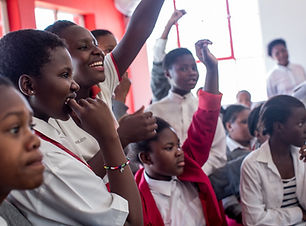
Across projects on sexual and reproductive health policy, media representations, pornography, menstruation, and gender-based violence, I focus on young people in particular. This strand of my research examines youth sexuality as a key site where gendered norms, moral regulation, and institutional power are most clearly at work. Rather than treating young people’s sexual lives as problems to be managed or risks to be reduced, I approach youth sexuality as socially situated, politically governed, and deeply shaped by inequality.
I analyse how young people are positioned through discourses of vulnerability, responsibility, and respectability—and how these positions shape what forms of agency are made possible or foreclosed. In foregrounding power, regulation, and resistance, this work contributes a feminist critique of dominant approaches to youth sexuality in research, education, and policy, while centring young people’s lived experiences and voices.

Project
Sexual Violence in Schools
After a successful bid, we were commissioned to conduct an impact evaluation of a five-year pilot intervention focused on school-based sexual violence by Soul City & Grassroot Soccer (NGOs implementing the intervention). The intervention was part of the Sexual Violence in Schools in South Africa (SeViSSA) programme, a national sexual violence intervention aiming to improve educational outcomes for girls through safer school environments. Our team evaluated a pilot intervention in Kayelitsha, an impoverished 'township' (or slum), in Cape Town. We used mixed-methods (surveys, interviews, focus group discussions) to assess the impact of the intervention at baseline (prior to implementation), mid-term (year 2) and end-term (year 5). The funding was discontinued before the planned end-term evaluation could be done, but the baseline (2015) and mid-term (2017) studies showed some promising outcomes and produced valuable findings that were widely translated into accessible formats, in addition to a journal article and conference presentations.
-
Co-Principal Investigators: Tracy Morison, Profs Sharlene Swartz & Catriona Macleod, Dr Ingrid Lynch
-
Funder: Comic Relief charitable trust (UK)

Book
South African Women as Champions of Change
The publication of this book forms part of a civil society programme of action for the African Women's Decade, coordinated by South African Women in Dialogue. It reports on the main issues facing South African women, namely: 1) poverty eradication in the context of gender; 2) early childhood development (ECD) in the context of gender; 3) violence against women; and 4) co-ordination of civil society initiatives. A fifth theme which cuts across all the others is employment creation. I wrote the chapter "Interventions for addressing violence against women".